







Big coats make their comeback in football With AMIRI, Enzo Maresca and Luciano Spalletti
When we think about the image of coats in the world of football, two iconic figures immediately come to mind — very different from each other, just as the coats that represent them are. The first is Arsène Wenger, who, with his famous adidas coat (and later PUMA, after Arsenal’s change of sponsor), built a large part of his personal branding. That coat – long, bulky, almost touching the ground – managed to transcend sporting boundaries, becoming one of the most widespread football-related memes, especially on TikTok and Instagram.
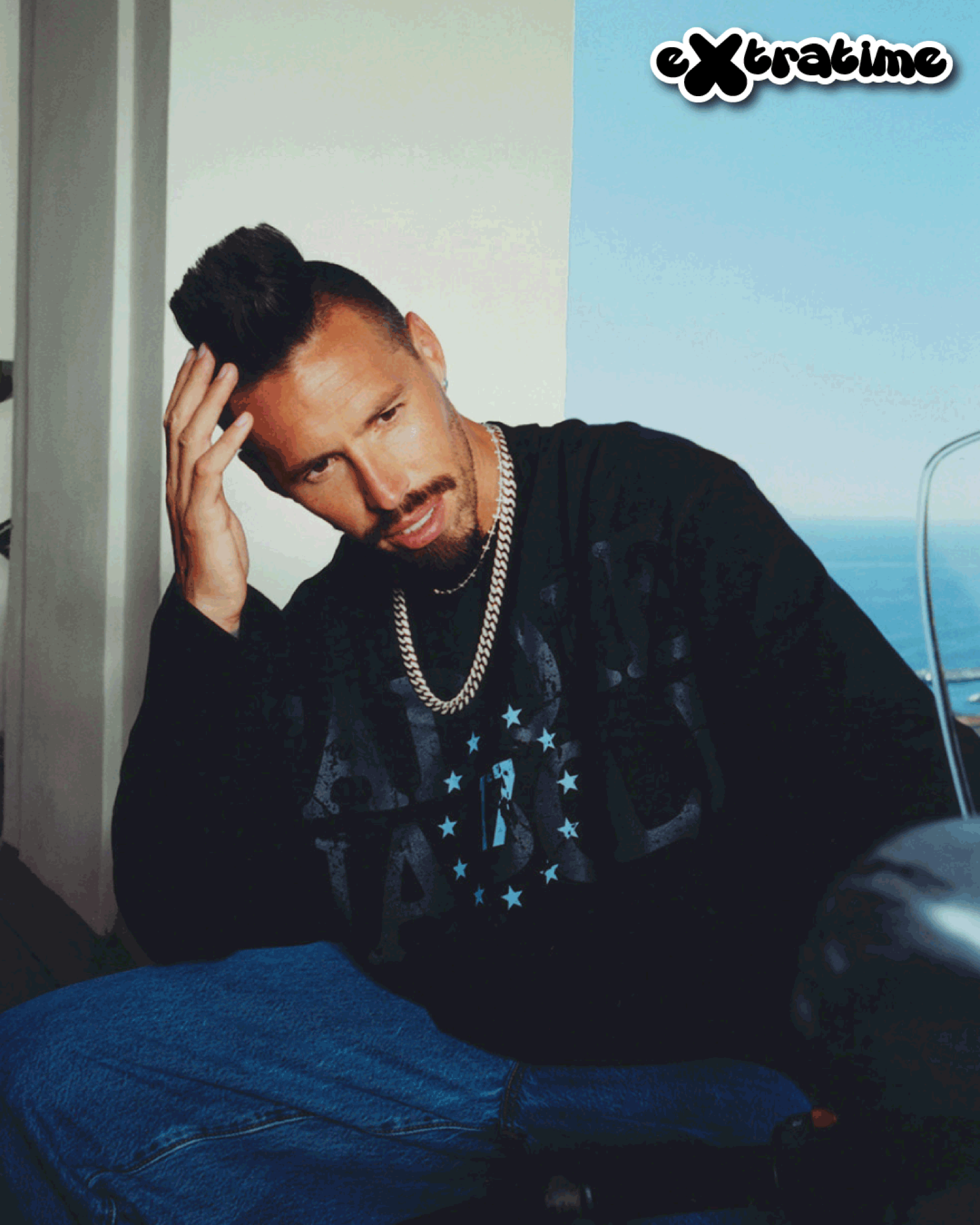
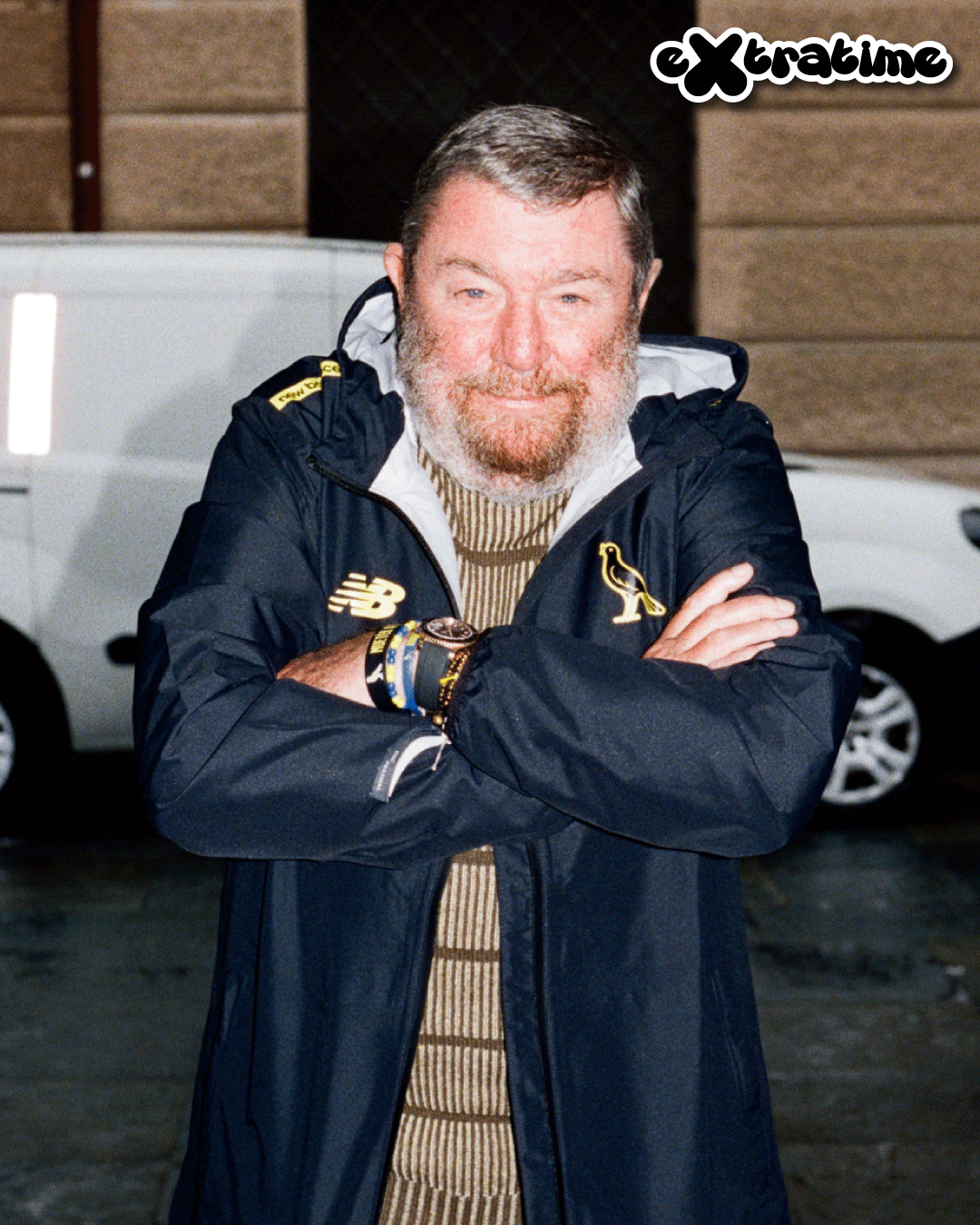
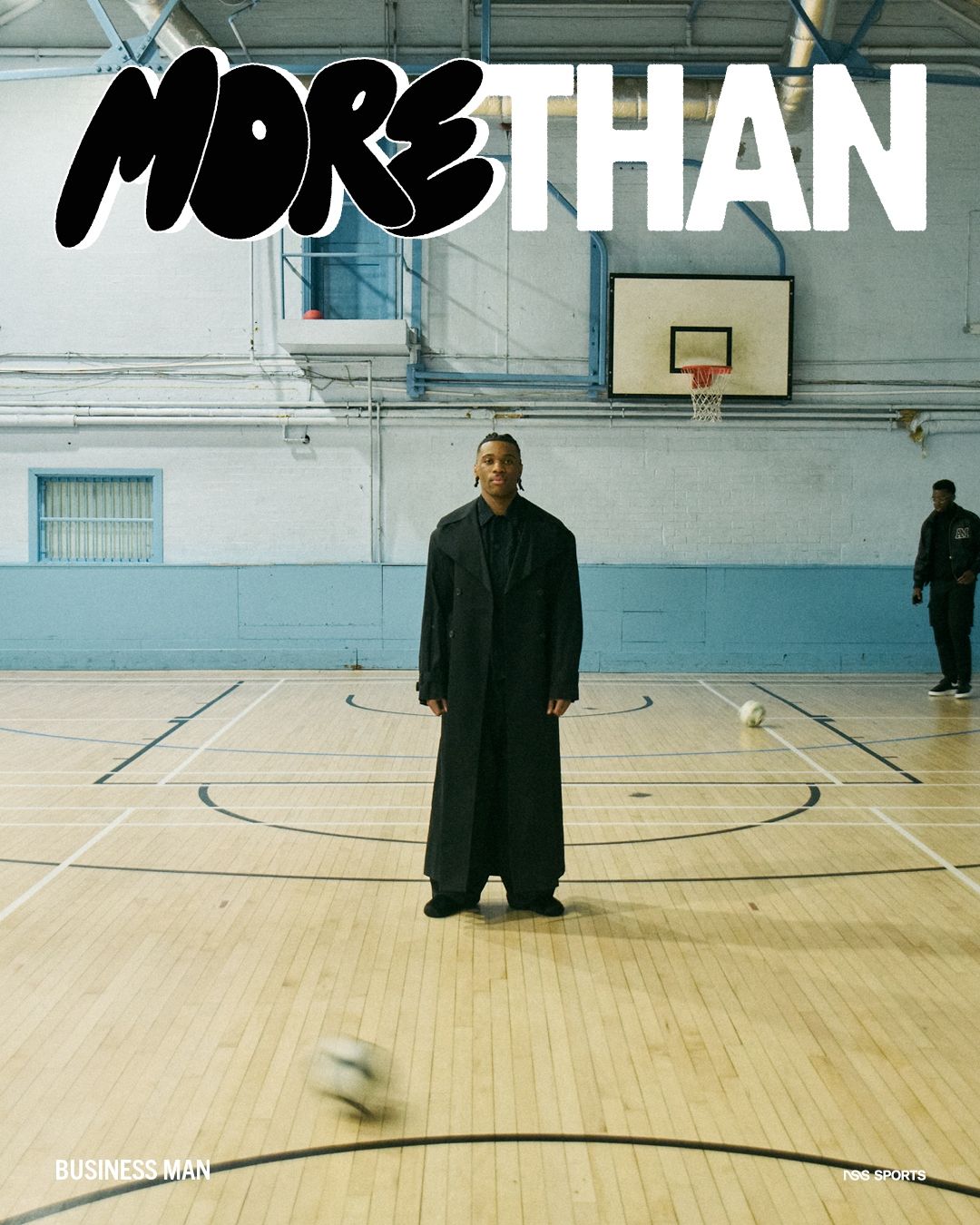
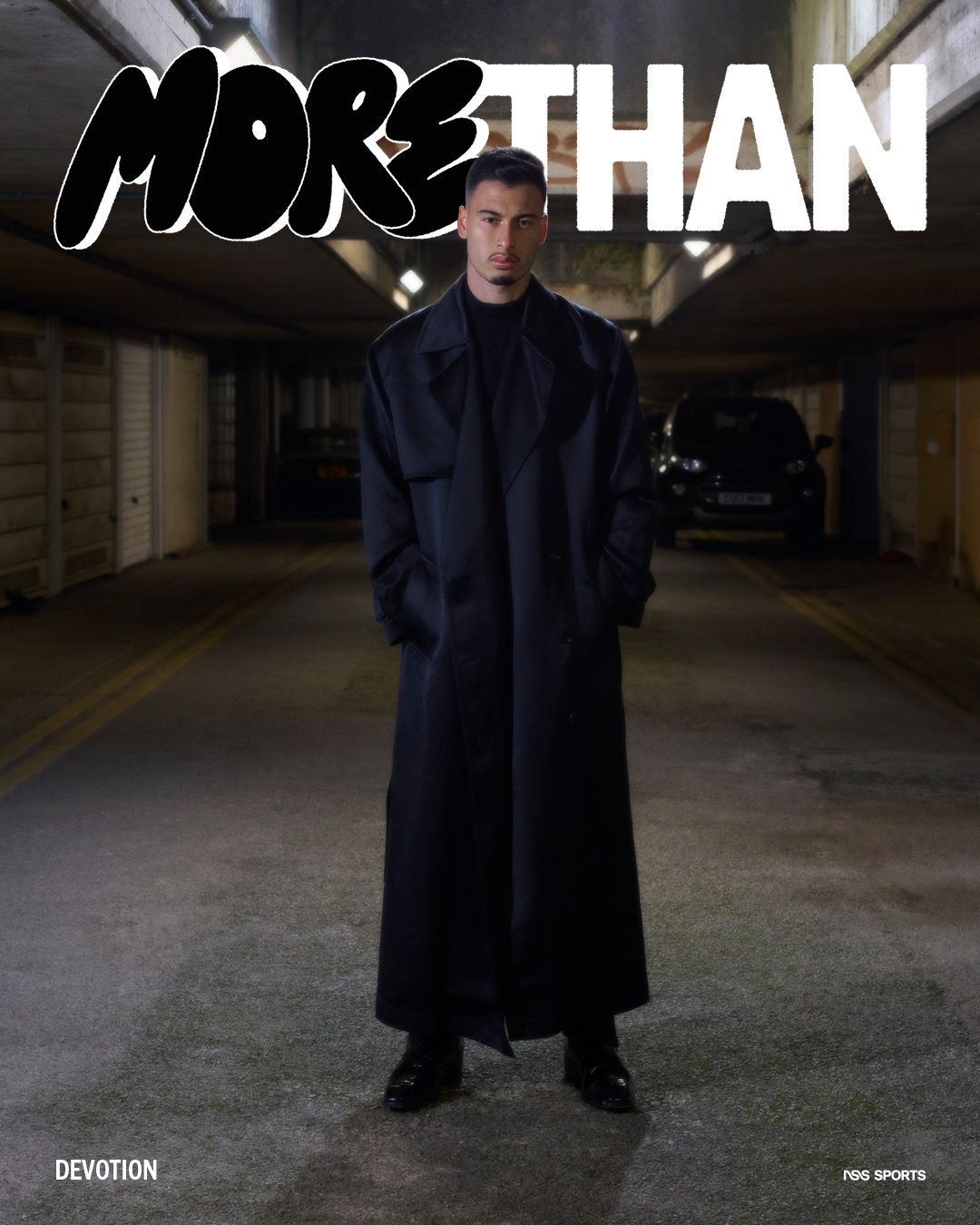
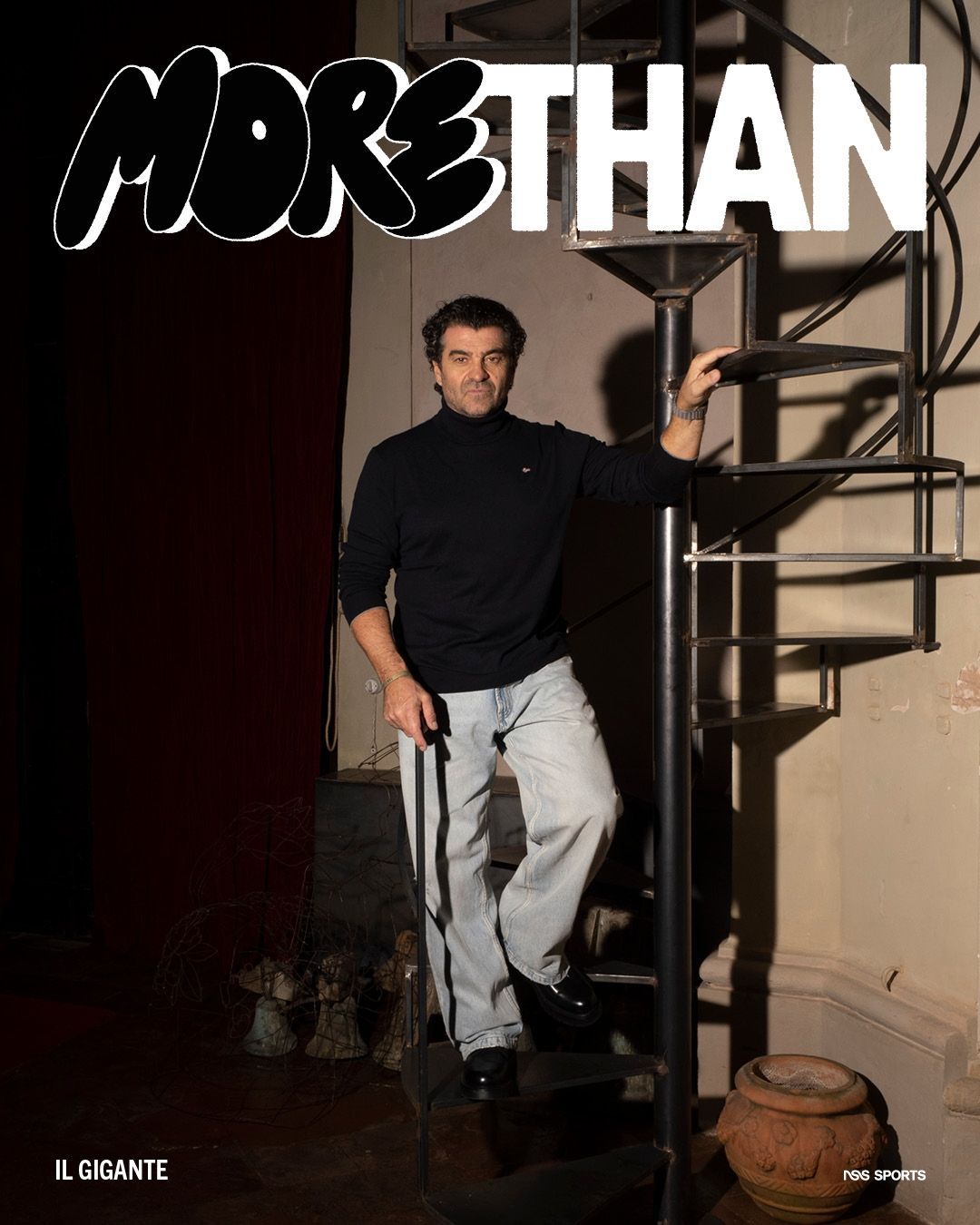
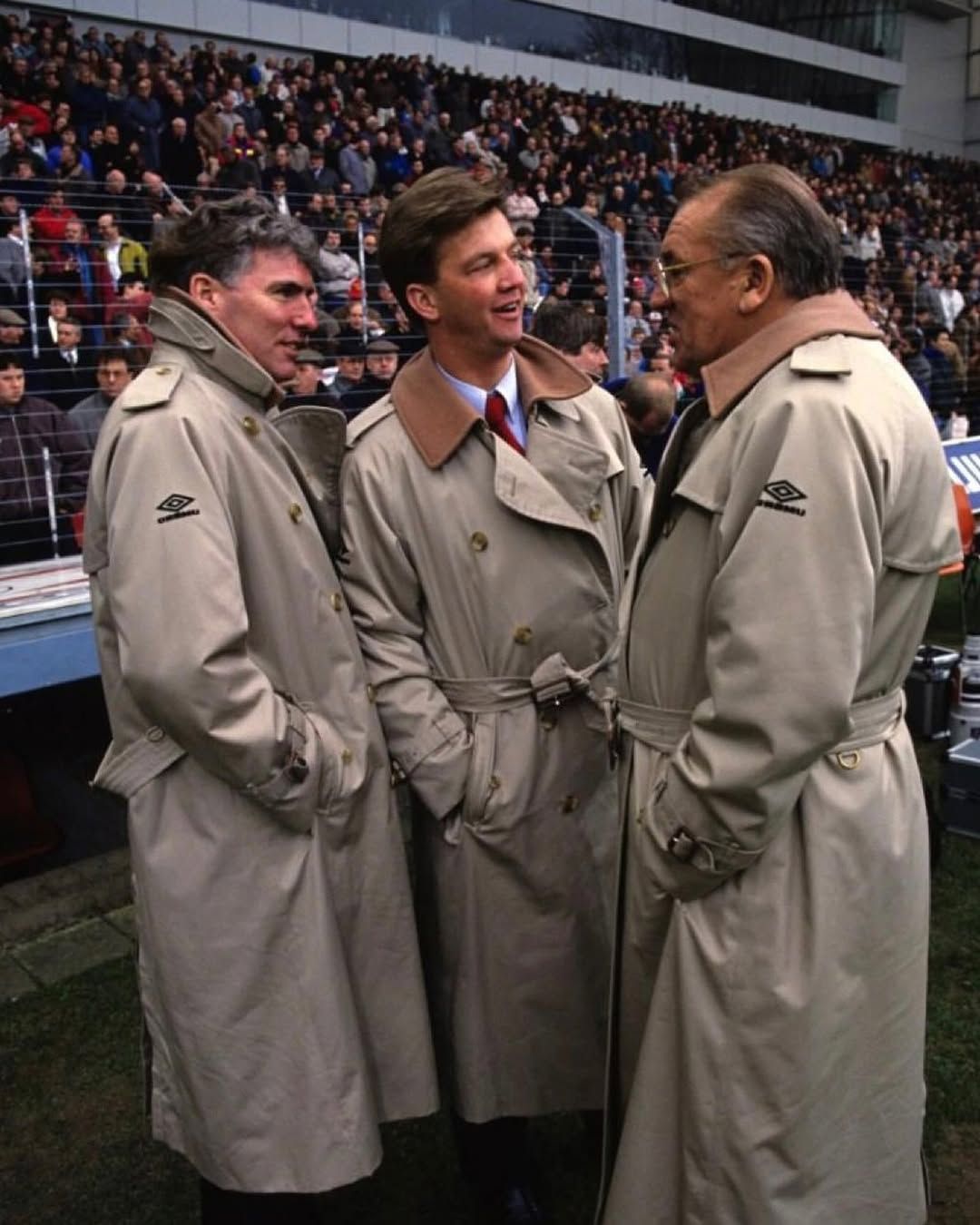
The other image, however, concerns Louis van Gaal. Yes, Van Gaal himself, who, back in his Ajax days during the 1991 season, together with his assistant Gerard van der Lem, used to wear incredible trench coats by Umbro. Today, while Wenger seems to have symbolically passed the torch to Enzo Maresca – who appears almost inseparable from the Chelsea coat made by Nike – we’re witnessing a comeback of coats with more classic lines and details. We see them not only on managers but also on players. In this sense, credit must go to the formal wear brands collaborating with teams: Giorgio Armani for Juventus and AMIRI for Barcelona, who have strongly reintroduced elegant and structured outerwear. However, while players only wear them during pre-match moments, it’s the managers – or at least some of them – who proudly show them off on the sidelines, as in the case of Luciano Spalletti.
The personal style of managers
Naturally, in most cases, the style displayed by managers depends almost entirely on the club’s sponsorships — whether related to technical sponsors or formal wear partners. For instance, Arsène Wenger would never have worn that extremely long coat if Nike hadn’t had a similar one in its catalog; the same goes for Louis van Gaal: even though that Umbro piece was an everyday model (as also demonstrated by the remake created by LC23 in collaboration with Umbro, replicating the exact same design), if the club hadn’t been sponsored by the English brand, the manager would never have worn it. And if coats are making a comeback today, credit does go to the brands — but not so much because of a deliberate strategy to reintroduce them into football, rather due to their natural presence in new collections. This is where the examples of Giorgio Armani and AMIRI come back into play: both have skillfully integrated coats into the aesthetic language of the teams they work with.
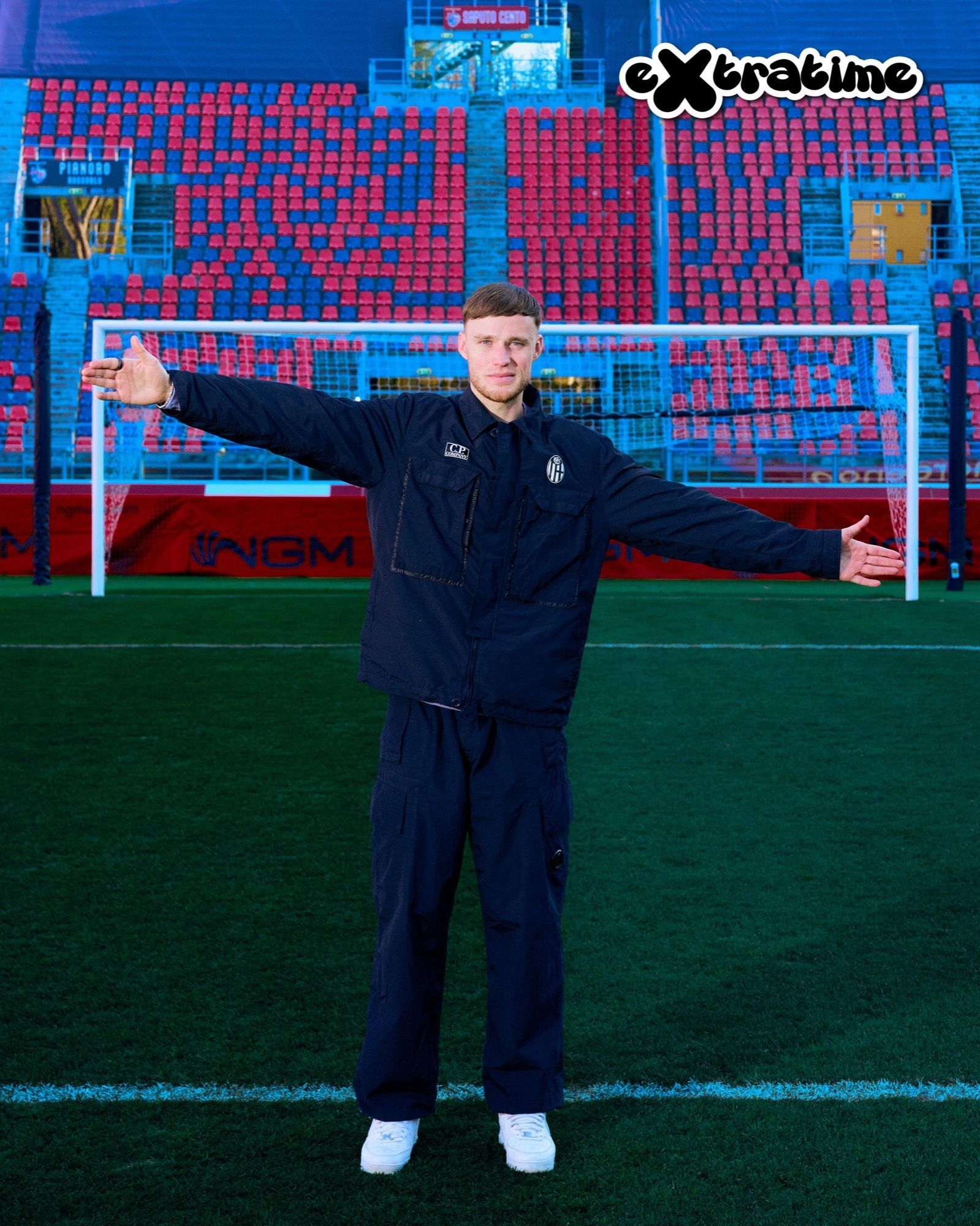
Over the last ten years, however, more and more managers have brought their own personal style to the pitch — above all, Pep Guardiola, who has practically defined a uniform characterized by a rather unusual combination: Stone Island and Rick Owens. Figures like Guardiola have therefore represented a glimmer of hope amid an increasingly flat formalwear scene. C.P. Company, which entered football through sponsorships with Bologna and Manchester City, offered silhouettes at least somewhat different from those of other teams, but still struggled to truly revolutionize — or rather, redirect — the homogenization of formalwear. Also because, for example, Guardiola himself continues to prefer wearing pieces from his personal wardrobe on the sidelines.
We can only be pleased, then, about the return of such an iconic garment as the coat, which will at least bring a bit of variety to the managers’ benches. We had already discussed, in this article, how Serie A managers — at one point, but in reality still today — have practically all adopted the same style.